
Constant Torque and Constant Power Control of Induction Machines – Theory, Characteristics, and Practical Implementation
This article presents a comprehensive technical explanation of constant torque and constant power control strategies in induction machines. It covers torque–speed characteristics, V/f control, field weakening operation, inverter-based drive implementation, mathematical foundations, and real-world industrial applications. The discussion is intended for electrical engineering students, researchers, and professionals involved in electric drive systems and power electronics.

Constant Torque and Constant Power Control of Induction Machines
1. Introduction
Induction machines are widely used in industrial drives due to their robustness, low maintenance, and economical construction. With modern Variable Frequency Drives (VFDs), precise speed and torque control has become practical and highly efficient.
2. Basic Principle of Speed Control
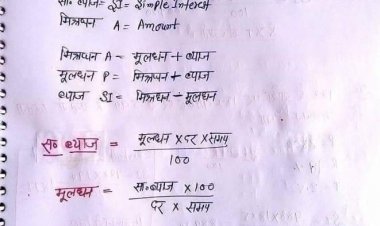
The synchronous speed of an induction motor is:
Where:
f = Supply frequency
P = Number of poles
Thus, speed control is achieved by controlling supply frequency using a power electronic inverter.
3. Constant Torque Control Region
3.1 Definition
In this region, the motor produces rated torque from zero speed up to base speed. It is also known as the flux-constant region.
3.2 Condition for Constant Torque
Air-gap flux is proportional to:
To maintain constant torque, flux must remain constant. Therefore:
This is called V/f control or scalar control.
3.3 Power in Constant Torque Region
Since torque (T) is constant, power increases linearly with speed.
3.4 Applications
- Conveyors
- Elevators
- Hoists
- Extruders
- Positive displacement pumps
4. Base Speed
Base speed is the speed at rated voltage and rated frequency. Beyond this speed, voltage cannot increase further due to inverter limits.
5. Constant Power Control Region
5.1 Definition
Above base speed, the motor operates in constant power mode. Here torque decreases as speed increases.
5.2 Field Weakening Principle
Above base speed:
- Frequency increases
- Voltage remains constant
Since flux decreases, torque capability reduces.
5.3 Why Power Remains Constant
If torque decreases proportionally to 1/ω:
Then power remains constant.
5.4 Applications
- Machine tool spindles
- Electric vehicles
- Rolling mills
- Traction systems
- Centrifugal compressors
6. Complete Torque-Speed Characteristic
Region I: Constant Torque
- V/f constant
- Flux constant
- Torque constant
- Power increases with speed
Region II: Constant Power
- Voltage constant
- Frequency increases
- Flux decreases
- Torque decreases
- Power constant
7. Comparison Table
| Parameter | Constant Torque | Constant Power |
|---|---|---|
| Flux | Constant | Decreasing |
| Voltage | Proportional to frequency | Constant |
| Frequency | Variable | Increasing |
| Torque | Constant | Decreasing |
| Power | Increasing | Constant |
8. Practical Implementation Using VFD
Modern induction motor drives use:
- Rectifier
- DC Link
- IGBT Inverter
- PWM Control
Advanced control methods include:
- Scalar (V/f) Control
- Vector Control (Field Oriented Control)
- Direct Torque Control (DTC)
9. Conclusion
Constant torque and constant power control are fundamental operating modes of induction motor drives. The constant torque region ensures stable operation under heavy load at low speeds, while the constant power region enables efficient high-speed performance using field weakening.







































.svg)